
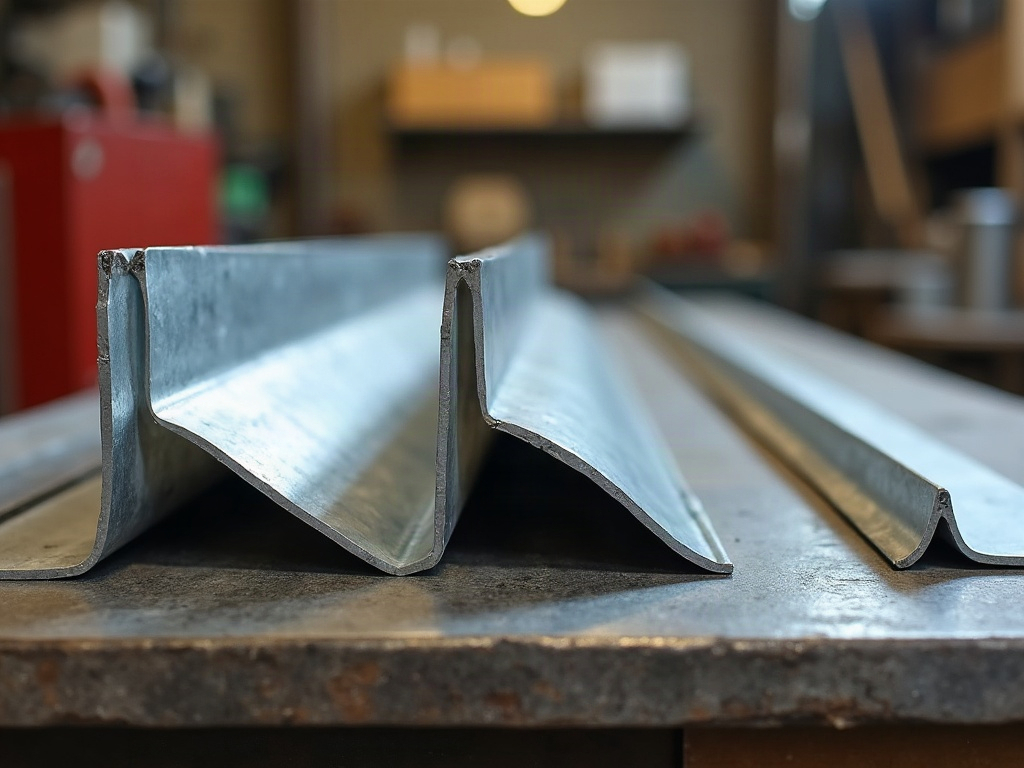
Kickout & Diverter Flashing: Custom Fabrication for Roofing & Siding Crews
The small formed piece that keeps water out of the wall — how to spec kickouts and diverters so they throw runoff clear of the cladding and into the gutter.
A kickout flashing is the little formed piece at the bottom of a roof-to-wall intersection that diverts runoff away from the wall and into the gutter, instead of letting it sheet down behind the siding. It is one of the smallest parts on the job and one of the most expensive to get wrong: when a kickout is missing or field-bent flat, water tracks down inside the wall assembly and the rot shows up years later as a repair that dwarfs the cost of the flashing. Diverters are the same idea applied elsewhere — a formed piece that redirects water at a wall termination, a penetration, or above an opening. This guide is written for roofing and siding crews and GCs who want these pieces fabricated to the actual condition rather than snipped and folded out of a stock stick on a ladder.
What a kickout does — and why the small piece matters
Where a sloped roof edge dies into a sidewall, the step or apron flashing carries water down the intersection. At the very bottom, that water has to be thrown clear of the wall and out over the gutter — that is the kickout’s only job. A kickout is formed with a raised, angled leg that deflects the flow outward rather than letting it run straight down the face and behind the cladding. It sits at the lower termination of the roof-to-wall line, tied into the last course of step flashing, and it laps over the wall’s water-resistive barrier so everything drains to the outside. Modern residential code (the IRC) specifically calls for a kickout at the lower end of roof-to-wall intersections, and it is one of the first details a good inspector looks for.
The detail that decides whether it works: a kickout has to divert water and integrate cleanly with the step flashing above it and the WRB behind it. A generous, sealed, properly handed kickout with a hemmed edge sheds water and lasts; a flat piece bent by hand in the field, or a brittle preformed plastic diverter, cracks or lets water sneak past the seam. Send us the pitch, the leg lengths and the hand, and we’ll form a one-piece kickout that laps right the first time.
Custom-formed vs. field-bent vs. preformed plastic
Crews solve the kickout three ways, and only one of them is repeatable. Field-bending a piece of coil on site is fast but inconsistent — the angle, the leg lengths and the seal vary ladder to ladder, and a soldered or sealed corner done in the field rarely matches a shop corner. Preformed plastic diverters install quickly but don’t always match the metal package and can get brittle over time. A custom-formed metal kickout gives you a consistent angle, hemmed edges, and a corner that’s closed the same way every time, in the same substrate and finish as the rest of your flashing. When you’re running dozens of the same condition across a development, fabricating them to one spec means every one laps and seals the same — and you can match them to the gauge in our metal gauge guide and the substrate in the aluminum vs. steel guide.
Diverters beyond the kickout
The same “throw the water somewhere better” logic shows up all over the exterior. A head diverter above a door, window or garage opening pushes water to the sides instead of dumping it on the threshold. A wall diverter steers runoff around a penetration, a light or a bracket. A rake or eave diverter keeps water off an entry or a walkway below. These are all short, formed pieces — the trick is a clean bend, a hemmed edge and enough leg to lap into the surrounding metal or WRB. Tell us the condition and what the water needs to clear, and we’ll form the diverter to fit it, the same way we handle terminations in our valley flashing guide.
How to spec a kickout or diverter
A kickout is quotable once we know how the water has to move. Give us the roof pitch at the intersection and the hand — whether the piece kicks left or right as you face the wall — because a kickout is not symmetrical. Tell us the leg lengths: the roof leg that laps under the step flashing, the wall leg that runs up behind the cladding, and the height of the diverting return. Note the substrate and gauge, the finish or color to match the rest of the flashing, and whether the corner should be soldered, sealed or mechanically seamed. For a diverter, give us the opening or penetration it protects and which way the water should go. A quick sketch or a photo with a couple of measurements gets us most of the way there — turning that into a clean fabrication drawing is exactly what our guide to spec’ing custom trim & flashing walks through.
Lead time, quantities and getting it to the jobsite
Kickouts and diverters are small, so the driver of lead time is the count, the number of distinct hands and sizes, the corner treatment and the finish. A batch of identical right-hand kickouts in a stock color moves fast; a mixed set of hands, pitches and soldered copper corners takes longer, so tell us the quantities of each up front and we’ll give you a straight date rather than promise one and miss. We label pieces by hand and location and box them so your crew isn’t sorting a pile of look-alike parts on the deck — the left kickouts and the right kickouts arrive marked.
Quick pre-send checklist
- Roof pitch at the roof-to-wall intersection.
- Hand — left or right kickout (as you face the wall), and the quantity of each.
- Leg lengths — roof leg, wall/upstand leg, and the diverting return height.
- Corner treatment — soldered, sealed, or mechanically seamed.
- Material (steel with gauge, aluminum, or copper) and finish/color to match your flashing.
- Diverters — the opening or penetration protected and which way water should go, plus need-by date.
Made in Ogden and shipped nationwide, we fabricate custom kickout and diverter flashing — handed correctly, formed to your pitch and leg lengths, with soldered or sealed corners — in the substrate, gauge and finish that match the rest of your metal. Send your pitch, hands and quantities, and we’ll price it fast, flag anything that won’t lap cleanly, and build pieces that keep water out of the wall the first time.
Roof-to-wall details to flash?
Send your pitch, hands and quantities — we’ll fabricate kickouts and diverters that throw water clear of the wall.