
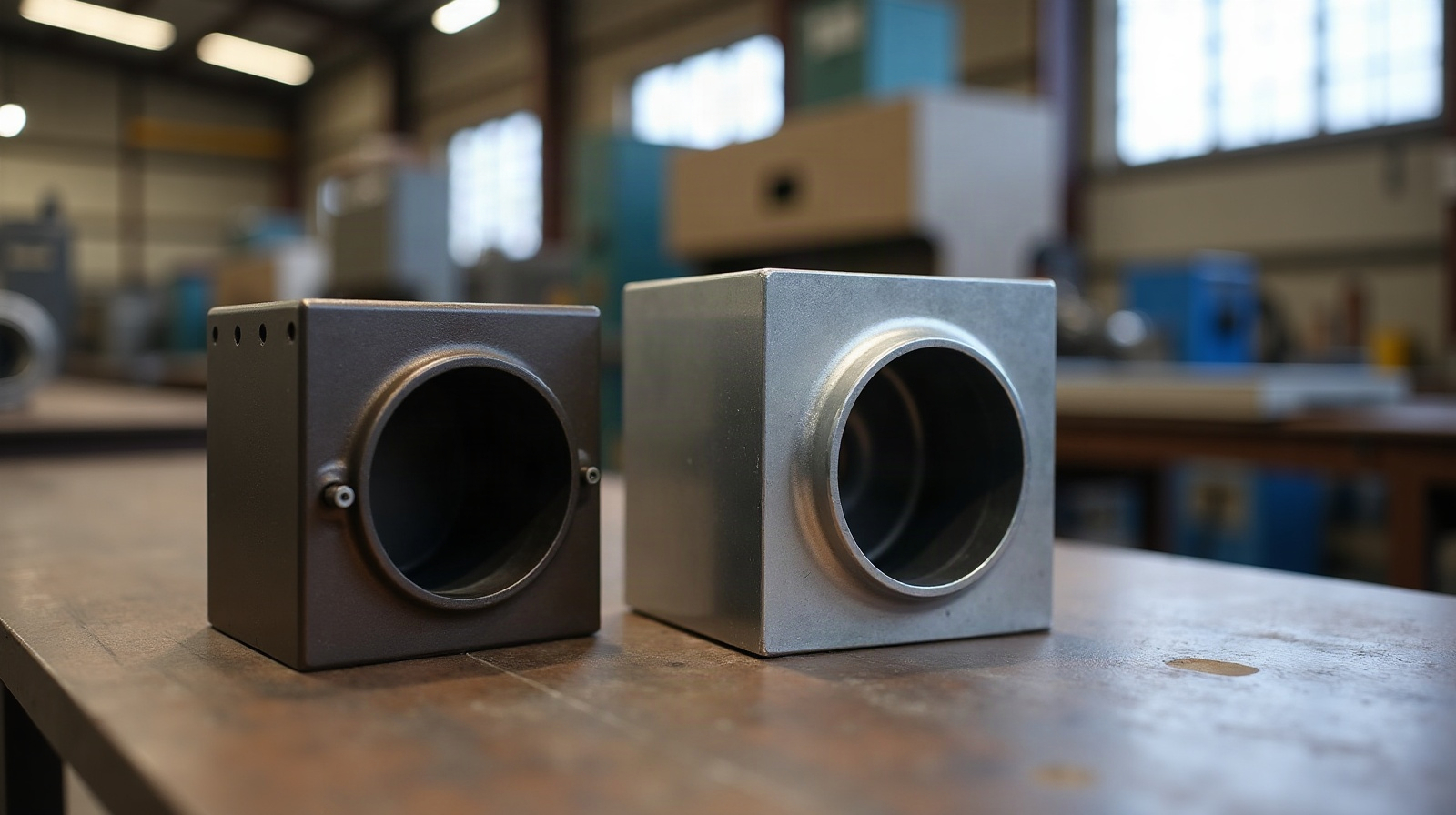
Custom Scupper Boxes & Conductor Heads: Fabrication for Commercial Roofing Drainage
How water leaves a parapet roof — how to spec through-wall scupper boxes, collector (conductor) heads and overflow so a low-slope roof drains clean and to code.
On a low-slope commercial roof with a parapet, the water has to get up and over — or through — the wall to leave the building, and a scupper is the opening that lets it. A scupper box is the fabricated metal sleeve that lines that opening and carries the flow through the parapet; a conductor head (also called a collector or leader head) is the open funnel-shaped box mounted on the wall below the scupper that catches the discharge and feeds it into a downspout. Done right, the pair moves a lot of water off a flat roof cleanly, keeps it off the wall face, and gives you a code-required overflow path. Done wrong, you get staining, ice at the outlet, and water finding its way back into the wall. This guide is written for commercial roofing crews, GCs and architects who want scupper boxes and conductor heads fabricated to the actual wall and drainage design rather than cobbled together on site.
Scupper box, conductor head, downspout — how the three work together
Think of it as a hand-off. Water ponds toward the low point of the roof and exits through the scupper box, a metal sleeve with a roof-side flange that laps under the membrane or into the base flashing and a sleeve that runs through the parapet to daylight. On the wall side, the conductor head sits just below the scupper mouth, open at the top to catch the discharge, and tapers to an outlet at the bottom sized to the downspout. From there the downspout (conductor) carries it down the wall to grade or a boot. Because the conductor head is open, it also breaks the flow and sheds debris, and it is the natural place to build in overflow. Keep the three sized to each other — a generous scupper feeding an undersized head and downspout just backs water up at the wall.
The detail that decides whether it works: the roof-side flange and how the scupper box ties into the waterproofing. The sleeve has to run the full thickness of the parapet and the flange has to lap the right way under the membrane or counterflashing so water sheds out, never behind. Tell us the wall thickness, the roof assembly and how the membrane terminates, and we’ll form a scupper box with a flange and sleeve that integrate with the roof instead of fighting it.
Primary vs. overflow scuppers
Low-slope roofs need two ways to drain: a primary path for everyday rain and snowmelt, and a secondary (overflow) path in case the primary clogs or is overwhelmed. Overflow scuppers are set above the primary flow line — per the project’s drainage design and local code — so they stay dry until water backs up, then discharge visibly where someone will notice the problem. We fabricate both as matching boxes, and we’ll build the overflow to the height and opening your engineer specifies. Give us the primary and overflow sizes and set heights from the drawings; we don’t guess at code numbers, we form to the spec you provide.
Spec’ing the scupper box
A scupper box is quotable once we know how it meets the wall and the roof. Give us the opening size (width × height of the throat), the wall thickness so the sleeve runs the full depth of the parapet, and the flange size and side (roof flange, face flange, or both). Tell us whether the mouth is open-faced or has a front, whether you want a hemmed or caulk-free folded lip on exposed edges, and the material, gauge and finish — the gauge logic is the same as our metal gauge guide, and the substrate choice follows the aluminum vs. steel guide. Soldered seams on copper or stainless, sealed and riveted on aluminum — call out watertight corners where it matters.
Spec’ing the conductor head
Conductor heads range from a plain collector box to an architectural feature on the front of a building, so tell us which end of that scale you want. We need the overall box size (how wide and deep it reads on the wall), the outlet size and shape to match the downspout — round or rectangular — and the inlet opening at the top to catch the scupper discharge. Note any overflow slots or weeps, whether you want a decorative front, crimp or bead, and the mounting (concealed cleats or face straps). Match the outlet to your downspout so the transition is clean — that sizing pairs with our gutter & downspout fabrication guide. A sketch with a couple of dimensions gets us most of the way; turning that into a clean fabrication drawing is exactly what our guide to spec’ing custom trim & flashing walks through.
Material, finish and matching the rest of the metal
Scupper boxes and conductor heads live on the wall where everyone sees them and the water is always working, so the material matters. Aluminum is light and won’t rust; galvanized or coated steel is economical and strong; copper and stainless take a soldered seam and age well on higher-end work. Whatever you choose, match the finish and color to the rest of your exterior metal so the drainage reads as part of the building, not an afterthought bolted on — the same discipline we bring to parapet coping caps along the top of the same wall. Tell us what the coping, counterflashing and downspouts are and we’ll match it.
Lead time, quantities and getting it to the jobsite
Scupper boxes tend to repeat around a building while conductor heads are often one-off or handed, and both drive the schedule differently. What moves lead time is the number of distinct sizes, whether seams are soldered, the finish, and any decorative front work on the heads. A run of identical boxes in a stock color moves fast; a set of soldered copper heads with overflow takes longer, so give us the quantities of each up front and we’ll quote a straight date rather than promise one and miss. We label pieces by location and box them in order so your crew installs off a marked bundle instead of sorting look-alike parts on staging. Made in Ogden and shipped nationwide, scupper boxes and conductor heads ship protected so the flanges, seams and hems arrive true.
Quick pre-send checklist
- Scupper opening — throat width × height, and primary vs. overflow (with set heights from the drawings).
- Wall thickness so the sleeve runs full depth, plus flange size and side.
- Conductor head — box size, inlet opening, and outlet size/shape to match the downspout.
- Overflow — slots or weeps on the head, if required.
- Edges & corners — hemmed lips, soldered or sealed seams, decorative front if any.
- Material (steel with gauge, aluminum, copper or stainless) and finish/color to match your metal, plus need-by date.
Made in Ogden and shipped nationwide, we fabricate custom scupper boxes and conductor heads — primary and overflow, plain or architectural — formed to your wall thickness, opening and downspout, in the substrate, gauge and finish that match the rest of your metal. Send your openings, wall section and downspout sizes, and we’ll price it fast, flag anything that won’t drain or lap cleanly, and build pieces that move water off the roof the first time. It pairs naturally with the top of the same parapet — see our parapet coping caps & cleats guide.
Parapet roof to drain?
Send your scupper openings, wall section and downspout sizes — we’ll fabricate boxes and heads that drain clean and to code.